
Before You Hit "Order": Packaging Mistakes That Cost Brands Time and Money
This guide is for startups, small businesses, and growing brands ordering custom printed pouches for the first time. In about 10 minutes, you'll learn the most common mistakes we see and how to avoid them before placing your first pouch order.
Launching a product is exciting. Ordering custom packaging shouldn't be confusing.
1. Who's Filling Your Pouches?
This is huge. The most common answer we get from new brands . "I am." After understanding "what" is going in your pouch, the filling process is the next important question to ask.
Printed pouches aren't the finished product.
Your pouches arrive ready to be filled—not already filled and sealed.
Someone still has to:
- fill them
- seal them
- inspect them
That might be:
- you
- a co-packer
- a commercial kitchen
- your production team
A good reality check:
Every pouch you buy at the grocery store had to be filled and sealed somewhere. Would you buy one that wasn't sealed? Of course not.
If you're filling product yourself there's an effective (and affordable) tool called a band sealer. See video below:
2. Understand the Real Cost of Small Runs
Don't compare 100 pouches to 10,000.
This is probably the biggest misconception new brands have.
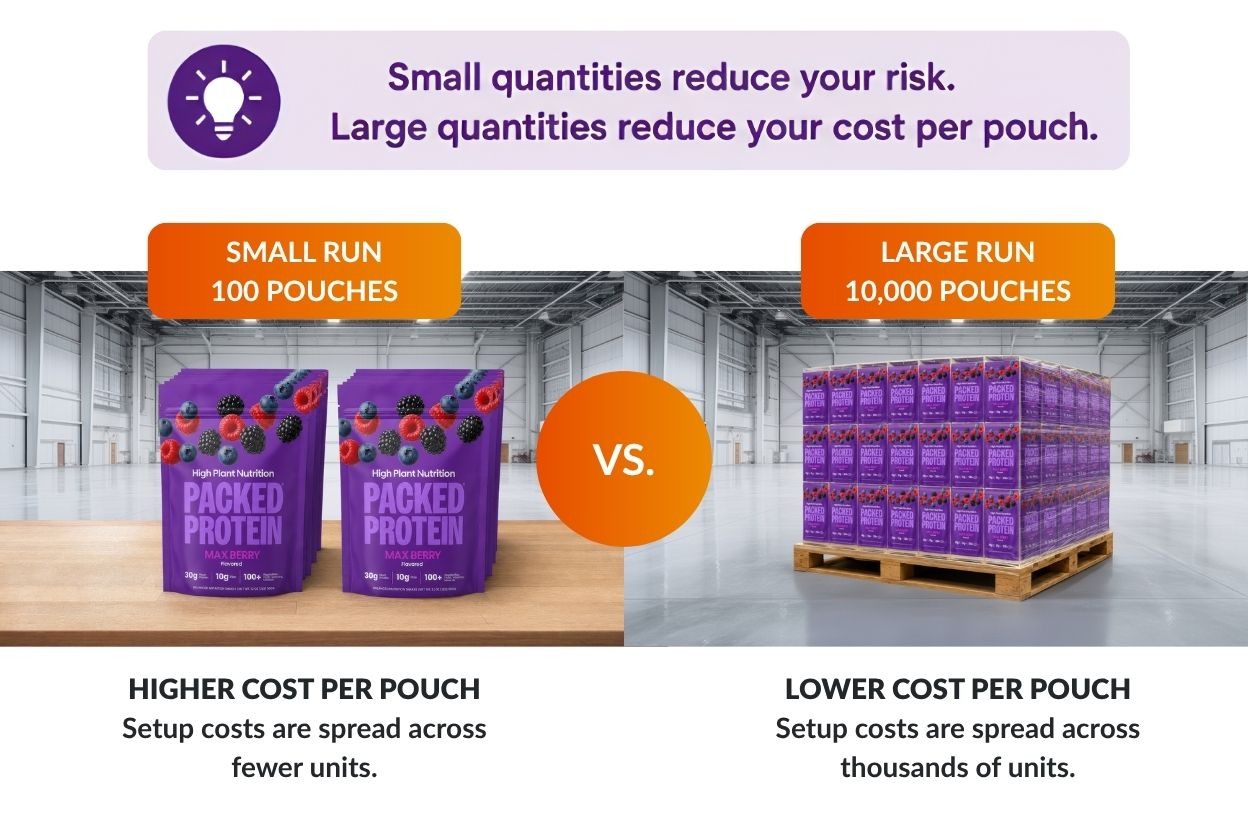
Many entrepreneurs expect packaging to cost pennies per pouch, but digital printing works differently. Small quantities provide incredible flexibility—but each pouch costs more because setup costs are spread across fewer units.
Once you understand how pricing scales with quantity, planning your budget becomes much easier.
Related blog post: Why Is It $4 A Pouch? (Lets Talk About Low Minimum Pouch Orders)
Check out this visual:
Small quantities reduce your risk / Large quantities reduce your cost per pouch.
3. Size Matters More Than You Think
Customers almost always shop by ounces.
Manufacturers work in dimensions.
An "8-ounce pouch" can mean very different things depending on:
- product density
- shape
- headspace
- filling method
Instead of guessing, hold actual pouches in your hands. That's why sample kits save so much time.
Don't buy your first production run based only on product weight.
The table below has some good starting points - but ALWAYS get a sample to test and approve. Its your responsibility.
Pouch Sizing & Capacity Guide
Use these estimates to find the right pouch dimensions for your product. Actual capacity may vary based on product density.
Stand-Up Pouches
| Size (W x H x G) | Fill Weight | Volume |
|---|---|---|
| 3.25" x 4.75" x 2" | ~28–45 g | ~2–3 fl oz |
| 4.375" x 6" x 2" | ~75–100 g | ~5–7 fl oz |
| 5" x 6.5" x 2.5" | ~110–140 g | ~8–10 fl oz |
| 5" x 7" x 3" | ~150–180 g | ~10–12 fl oz |
| 5.75" x 7.5" x 2.5" | ~200–250 g | ~14–17 fl oz |
| 6.5" x 8" x 2.5" | ~250–300 g | ~18–22 fl oz |
| 6.75" x 8.5" x 3.5" | ~300–375 g | ~22–26 fl oz |
| 7" x 9" x 3" | ~350–450 g | ~24–30 fl oz |
| 7.25" x 6" x 2" | ~180–220 g | ~12–15 fl oz |
| 8.125" x 10" x 3.5" | ~475–600 g | ~32–40 fl oz |
| 9.875" x 10.5" x 3" | ~750–900 g | ~50–60 fl oz |
| 12" x 12.5" x 3.5" | ~1.2–1.5 kg | ~80–100 fl oz |
Flat Pouches
| Size (W x H) | Fill Weight | Volume |
|---|---|---|
| 3.25" x 4.5" | ~10–20 g | ~0.5–1 fl oz |
| 3.375" x 5.5" | ~20–35 g | ~1–1.5 fl oz |
| 4" x 6" | ~40–60 g | ~2–3 fl oz |
| 5" x 5.5" | ~50–75 g | ~2.5–4 fl oz |
| 5" x 7" | ~80–120 g | ~4–6 fl oz |
| 6" x 7" | ~120–180 g | ~6–9 fl oz |
| 7" x 9" | ~200–300 g | ~10–15 fl oz |
| 7" x 12" | ~350–500 g | ~18–25 fl oz |
4. Your Artwork Is More Than a Pretty Label
Most brands already have a logo. That's a great start.
But production-ready pouch artwork also includes things like:
- barcodes
- nutrition panels
- regulatory copy
- bleed
- safe areas
- white layers (for windows)
Good designers understand branding. Packaging designers understand production.
Pro Tip
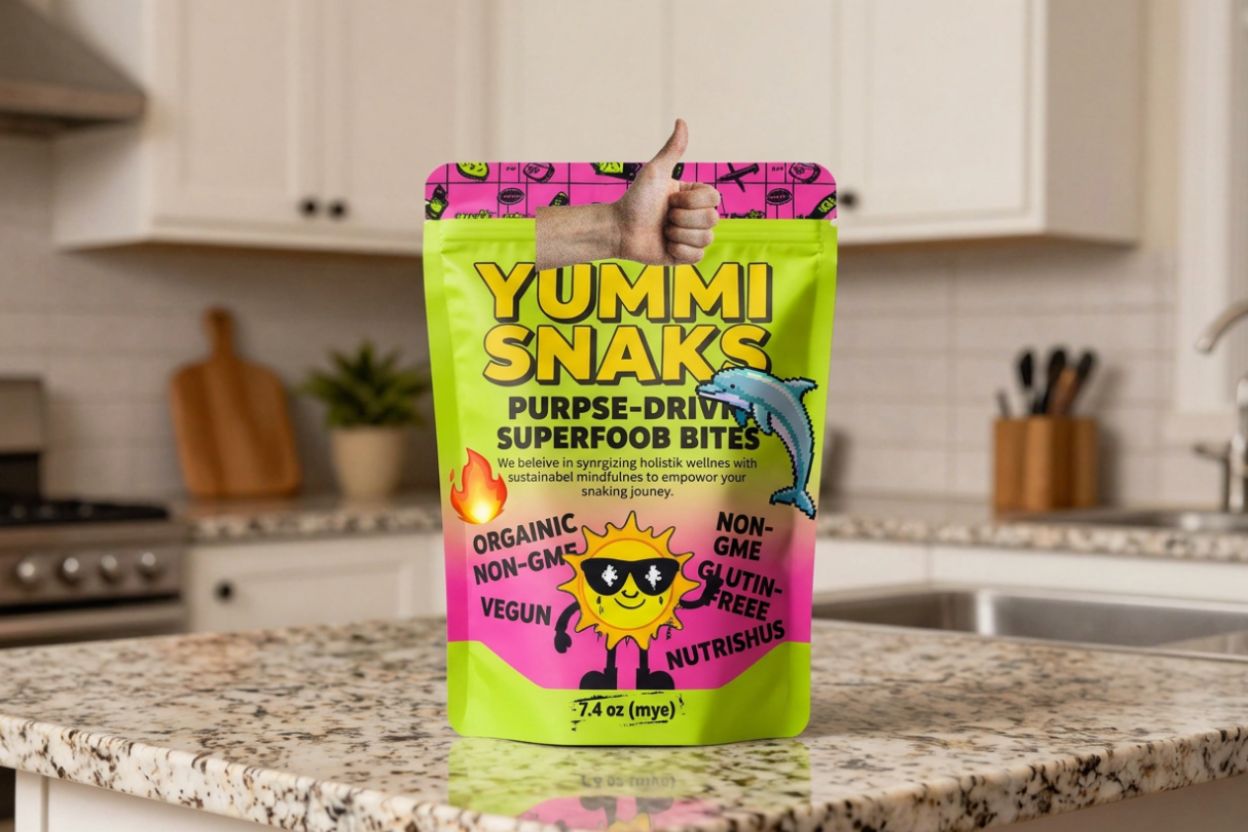
AI is great for brainstorming layouts and concepts, but final production files still need human review. Don't do this:
5. Expect a Little Refinement
Almost nobody gets their first pouch perfect.
You might discover:
"I wish the window was bigger."
"The logo should be higher."
"We should move the barcode."
"The tear notch should move."
That's normal.
Leave yourself enough time to make adjustments before launch instead of treating your artwork as "one and done."
6. Think Beyond Your First SKU
Don't design only for today's product. Think about tomorrow.
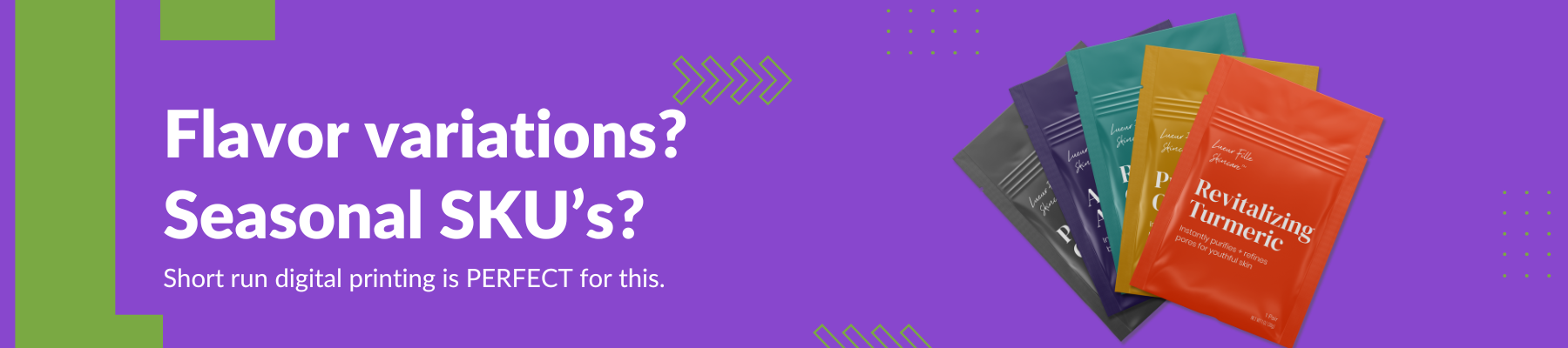
If additional flavors, scents, or varieties are coming, plan for them now.
Building a flexible design system makes future launches much easier.
It's also a great opportunity to evaluate ordering multiple SKUs together when it makes financial sense.
Remember: With short run digital printing you can order as few as 100pcs. Test and try without adding too much cost to your initial order.
7. Balance Price With Inventory
Everyone wants the lowest price per pouch. But the cheapest pouch isn't always the smartest purchase.
Ordering too many can tie up cash and leave you with packaging that becomes outdated.
Ordering too few can increase your cost per unit.
The goal is finding the quantity that fits your budget, sales forecast, and growth plans.
See #2 and # 6 above.
8. Make Reordering Easy on Yourself
Your first order teaches you a lot.
Your second order should be easier.
Keep organized records of:
- artwork
- approved proofs
- SKU versions
- quantities
- material choices
- production notes
Future you will appreciate it.
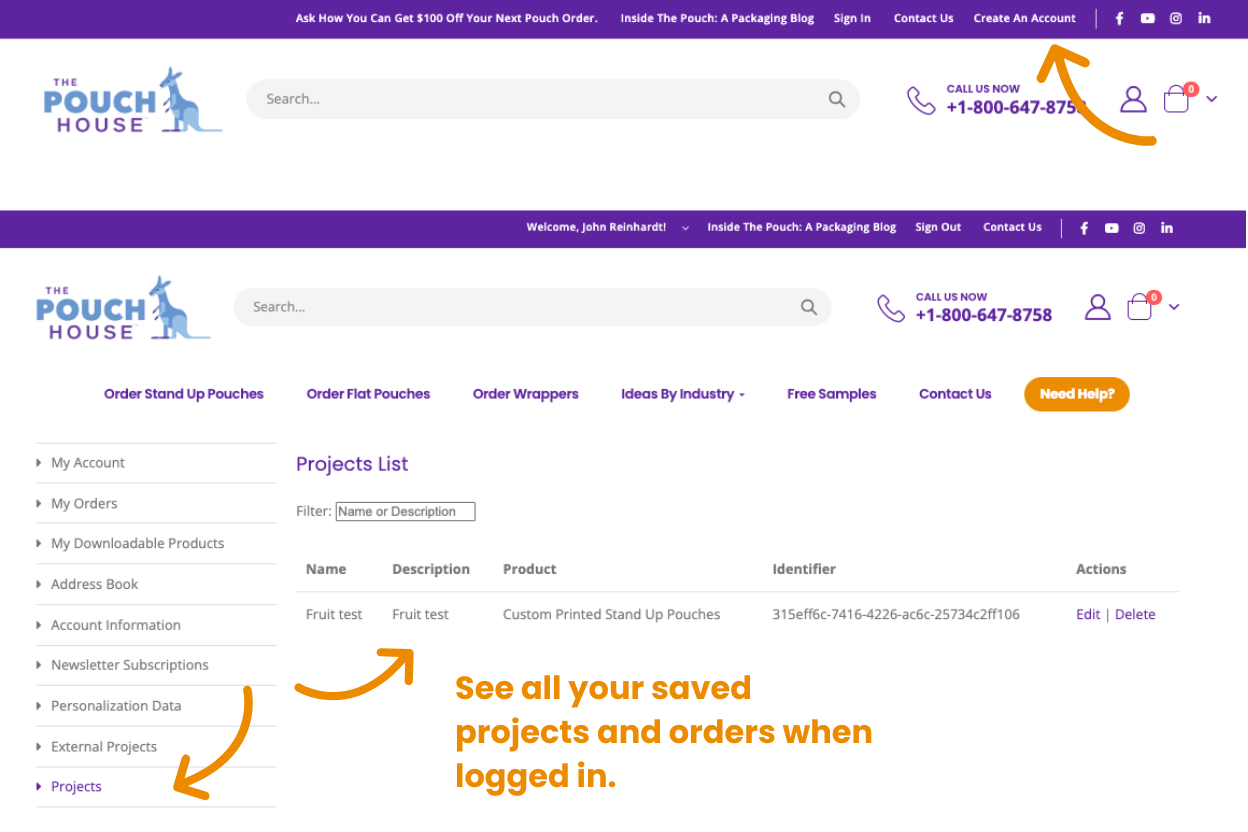
Important: If you order online make sure you're logged in to see order history and previous art files.
Final Thoughts
You're Not Expected to Know Everything
Every successful product started somewhere.
Whether you're launching your first product or your tenth, understanding these fundamentals helps you avoid delays, unnecessary costs, and surprises.
That's why we've also created a printable planning checklist you can reference before starting your next pouch project.
Download the First-Time Pouch Planning Checklist
One More Thing...
Leave Room for the Unexpected
Custom packaging isn't something you order on Tuesday for Friday's product launch.
Give yourself time for artwork, proofs, revisions, and production so you're not making rushed decisions.
If you ever need help there are pouch specialists standing by!